
In what will certainly become a flood of papers about GPU acceleration of Java applications on mobile devices, a masters theses by Iype P. Joseph at the University of Ottawa claims 8x performance gains and 3x reductions in power consumption through the use of Java binding with OpenCL 1.1 on a a Freescale i.MX6Q SabreLite board. With NVIDIA entering the programmable mobile GPU … [Read more...]
GaussianFace: Computers Claimed to Beat Humans in Recognizing Faces
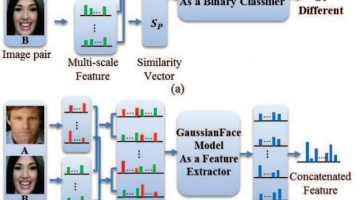
In a human vs. computer test on 13k photos of 6k public figures, the GaussianFace project claims to identify human faces better than humans (97% human accuracy vs. 98% computer accuracy). The authors claim their model can adapt automatically to complex data distributions, and therefore can well capture complex face variations inherent in multiple sources. The reporters at The … [Read more...]
PGI 14.4 Release Contains Much OpenACC C++ Goodness

PGI released their 14.4 and upcoming 14.7 OpenACC 2.0 roadmap. The expectation is that we will see the 14.4 release in early May and the 14.7 release in early July. Note: these are not official PGI dates. Analysis: The 14.4 support of atomic operations will enable many low-wait algorithms such as counters and massively parallel stacks. Improved reduction performance in … [Read more...]
(4/24 update) Signals from Nvidia’s Sumit Gupta

Sumit Gupta is a busy man. Named by HPCwire as a 2013 "Person to Watch", Sumit does not idly take time to create a blog post unless it conveys a message about the NVIDIA Tesla development and marketing effort. His recent blog, "Fostering an Explosion of Innovation in the Data Center", posted by Steve Hamm, recognizes how the data-center is going to be supporting mobile … [Read more...]
Inside NVIDIA’s Unified Memory: Multi-GPU Limitations and the Need for a cudaMadvise API Call

The CUDA 6.0 Unified Memory offers a “single-pointer-to-data” model that is similar to CUDA’s zero-copy mapped memory. Both make it trivially easy for the programmer to access memory on the CPU or GPU, but applications that use mapped memory have to perform a PCI bus transfer occur every time a memory access steps outside of a cache line while a kernel running in a Unified … [Read more...]
Micron’s New Automata Processor

Adding computation to memory is a fantastic way to accelerate applications and real-time solutions. Content addressable memory (CAM) is a widespread and compelling example of how hardware can speed table lookups. (Most virtual memory computers utilize CAM to perform page lookups.) Micron recently announced the Automata Processor (AP) that implements an NFA (Non-deterministic … [Read more...]
TechEnablement Adds Study Guides for CUDA, OpenACC, OpenCL, and Intel Xeon Phi
Today techEnablement.com has provided study guides to help students "learn to change the world" with supercomputing for the masses . The study guides cover: CUDA OpenACC OpenCL Intel Xeon Phi … [Read more...]
Intel Xeon Phi for CUDA Programmers

Both GPU and Xeon Phi coprocessors provide high degrees of parallelism that can deliver excellent application performance. For the most part, CUDA programmers with existing application code have already written their software so it can run well on Phi coprocessors. The key to performance lies in understanding the differences between these two architectures. Author's note: To … [Read more...]
HPC Balance and Common Sense
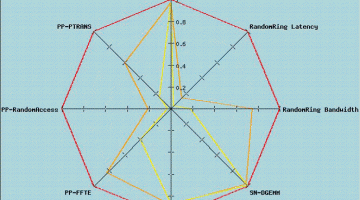
Key concepts for any procurement, system design, or system analysis are presented in my 2007 Scientific Computing article ( link ). A common sense approach is to keep what works and improve on what doesn’t. In other words, measure the performance characteristics of your current system(s) and keep those characteristics that support your workloads and improve on any that might … [Read more...]
Pragmatic Parallelism Part 1: Introducing OpenACC 1.0
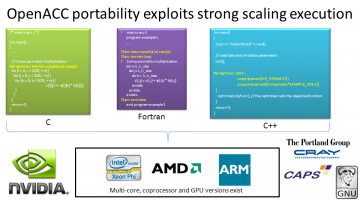
OpenACC lets you program in parallel C/C++ and Fortran in a manner that is concise and where the same source code can be recompiled to run on AMD GPUs, NVIDIA GPUs, Intel Xeon Phi, x86, and ARM. View at Dr. Dobbs (http://www.drdobbs.com/parallel/easy-gpu-parallelism-with-openacc/240001776) This is the first in a series of articles by Rob Farber on OpenACC directives, … [Read more...]