
Microway is hosting a webinar, "The Faster Path to Discovery: New Details on the Intel® Xeon Phi™ Product Family" that will cover the next-generation Knights Landing processor on June 24. Register here to attend. … [Read more...]
TACC Intel Xeon Phi – MIC – User Group Meeting July 8-9
TACC is hosting a meeting of the Intel Xeon Phi user group (IXPug) in Austin, TX July 8-9, 2014. IXPug has been created to promote the exchange of user experiences in adopting and using the Phi processors. Registration is free and open until July 1, 2014. Attend IXPug to start or enhance your Xeon (X86) programming skills on the Intel Many Integrated Core (MIC) architecture, … [Read more...]
Pragma Puzzler – Ambiguous Loop Trip Count in OpenMP and OpenACC

Pragma-based programming can be described as a "negotiation" with the compiler where the compiler has to assume corner-cases that are not apparent to the programmer. So why does the loop count in the OpenMP and OpenACC article, "A First Transparent OpenACC C++ Class" have to be assigned to a separate variable to generate a parallel … [Read more...]
PGI 14.4 is now released with lots of OpenACC C++ Goodness!

PGI 14.4 is now released with lots of OpenACC C++ goodness. Give it a try! Here is the link for or those with existing licenses. If need be, get a 15 day trial license and use some of my OpenACC tutorials. PGI Trial keys Trial license keys are used for evaluating PGI software. They are valid for fifteen days. If you haven't already done so, you … [Read more...]
Understanding the Rational behind 400 GB Flash-based DIMM Memory
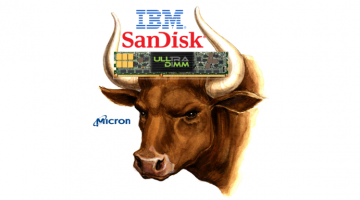
On January 24th, SanDisk announced shipments of ULLtraDIMM SSD storage in concert with an IBM announcement rebranding the SanDisk ULLtraDIMMs as eXFlash DIMMs. On March 21, SanDisk's stocks hit a 14-year high. ULLtraDIMM SSD storage puts Flash memory in a standard DIMM form factor that can be plugged into a memory socket. The Linux, Windows, or VMware UEFI/BIOS … [Read more...]
ExaFMM: An Exascale-capable, TF/s per GPU or Xeon Phi, Long-Range Force Library for Particle Simulations

Rio Yokota has implemented exaFMM, a Fast Multipole Method library to speed applications that must quickly calculate the effects of long-range forces such as gravity or magnetism on discrete particles in a simulation. Based on work he performed as a post-doc with Lorena Barba, the open-source FMM library runs on GPUs, multicore, and Intel Xeon Phi plus most of the … [Read more...]
Opportunities to Run on Jetson, the Latest Tegras, and ORNL Titan

Following Jen-Hsun's strategy to enable those who wish to use NVIDIA chips, developers can win a Jetson K1, get free access to the latest Tegra GPUs. Also those with big computations can submit INCITE proposals to run on the ORNL Titan supercomputer. Ends today (4/30/14) to possibly win a Jetson K1 (link) merely by submitting an idea via … [Read more...]
GaussianFace: Computers Claimed to Beat Humans in Recognizing Faces
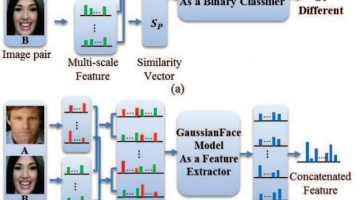
In a human vs. computer test on 13k photos of 6k public figures, the GaussianFace project claims to identify human faces better than humans (97% human accuracy vs. 98% computer accuracy). The authors claim their model can adapt automatically to complex data distributions, and therefore can well capture complex face variations inherent in multiple sources. The reporters at The … [Read more...]
Battery Powered Supercomputing for the Masses: First Impression of the NVIDIA Jetson TK1 board
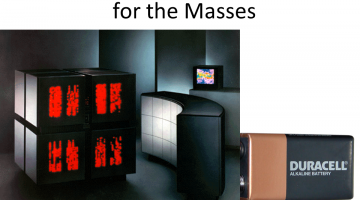
GTC 2014 demonstrated that we have now entered the "Battery Powered Supercomputing for the Masses" era. I had the opportunity to experience a Jetson TK1 board running ubuntu 13.04 at the hands-on lab. First impressions were very positive with a snappy response to the Ubuntu window system.. The GTC hands-on labs are oriented for techies and not the press. They provide a very … [Read more...]
Micron’s New Automata Processor

Adding computation to memory is a fantastic way to accelerate applications and real-time solutions. Content addressable memory (CAM) is a widespread and compelling example of how hardware can speed table lookups. (Most virtual memory computers utilize CAM to perform page lookups.) Micron recently announced the Automata Processor (AP) that implements an NFA (Non-deterministic … [Read more...]